


How much do you know about Bolivia? One of South America’s least popular countries, Bolivia holds a series of charms hardly ever mentioned among travel destinations. With paradisiacal landscapes and the preservation of its native roots, Bolivia may be considered one of the major sources, at present, of the South American continent’s traditions. Considered a developing nation, Bolivia maintains agriculture, fishing, mining and forestry among its main economic activities, added, of course, to the extraction of oil and tin. Divided into very different regions – from the eastern plains to the western highlands, passing through the Amazon basin in the north and down to the Plata River basin in the south – the Bolivian territory has nine departments, and a population estimated at over 10 million inhabitants, a blend of Amerindians, mixed race, Europeans, Asians and Africans.
This multiethnic feature can also be found in its variety of languages: even though Spanish is the most popular, the Aimara and Quichua languages are also very common among Bolivians, and the local government has officialized 34 other native languages. This tower of Babel, which is successful thanks to the good relationship between the peoples that formed the country’s history, results in a beautiful cultural structure, richly diverse in areas such as art, music, cookery and literature. But it must be noted that the infrastructure of this beautiful country leaves much to be desired: the roads and public thoroughfares are very badly conserved, traffic is chaotic, and the hotel network is not prepared for great demands, with simple family establishments and very little investment in the sector.
Main tourist spots
Let’s start with Bolivia’s most famous attraction: the Salar de Uyuin (Uyuin Salt Flat). Responsible for a paradisiacal landscape, linking the horizon to the sky in the same unique color, the Salar Uyuin is the largest salt flat in the world. From the top of its 3660 meter elevation, the Salar represents the death of a huge pre-historic lake that dried out and originated the incredible salt plain – which is 120 meters deep in some places – still present in the Bolivian landscape. Another lovely landscape formed entirely by nature is the Valle de la Luna (Valley of the Moon), situated at about 10km from the center of La Paz. Characterized by rock formations sculpted by erosion throughout time, the Valle de la Luna attracts tourists from all over the world. In La Paz, the tip is to observe the beauty of Bolivian architecture and culture, especially in the museums, handicrafts fairs, street markets and tourist spots such as the Convent of San Francisco and the Metropolitan Cathedral.
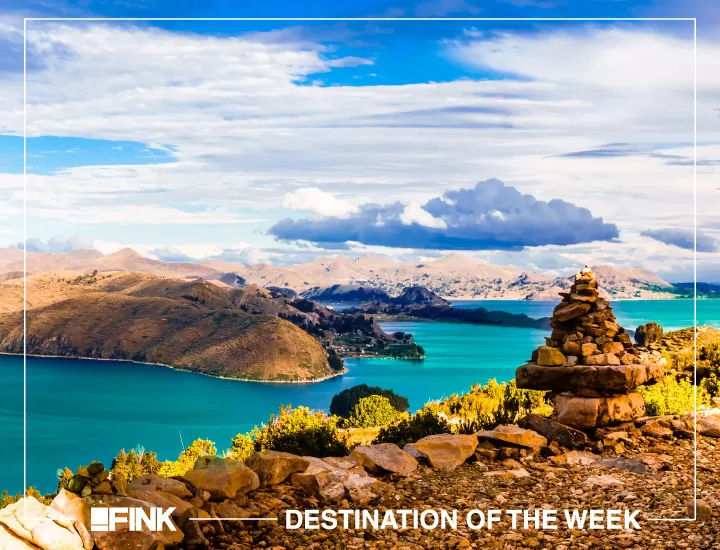
With regard to Bolivia’s natural beauties, there’s nothing to compare with its lakes. Beginning with the highest navigable lake in the world, the Titicaca, which also boasts the fame of being one of South America’s loveliest tourist spots. Supplied by five large rivers, melted water from glaciers, and rainwater, limpid Lake Titicaca has 41 islands, among them the city of Copacabana, the Island of the Sun and the Island of the Moon. Another beautiful and elevated Bolivian lagoon is found in the highland of San Luis, and is called the Green Lagoon. Sheltered in the Eduardo Abaroa National Reserve, it has a unique emerald-green color, due to the high concentration of magnesium in its water, which attracts flamingos. And speaking of flamingos, the Colorado Lagoon, with its red water, not only feeds the region’s birds – with the food chain completed by the surila algae and the Artemia salina crustacean – but is also responsible for the red color of the flamingos’ feathers.
History
A pre-Colombian archeological site situated on Bolivian soil, and only 70km from La Paz, the Tiwanaku is an excellent historical source and is studied by researchers from all over the world. Specialists in Andean culture consider the civilization that existed there the most important precursor of the Incan Empire. In the Torotoro National Park, situated 130km from Cochabamba, tourists are charmed by the picturesque scenery of a great valley with erosion- formed canyons, and by a vast historical wealth: pre-Incan ruins, rock paintings, and even dinosaur footprints. Tourists may lose themselves in rocky labyrinths, see the waterfalls of the Torotoro canyon and go on a tour to the fortress of Llama Chaqui.
Bolivia for adventurers
Backpackers will adore adventuring in Sucre, a city situated between La Paz and the salt flat. Although (or perhaps because) there are no tourist spots, the city is chock-full of Bolivian culture and is a good source of knowledge about the country’s routine. For adventurers, the tip is to explore part of Bolivia by trekking, because the country is full of trekking circuits that may take from 3 to 16 days to cover, and that attract tourists from all over the world who are willing to face the challenges and reap the rewards of the highlands’ incredible views. Another famous challenge is to ride through the “most dangerous road in the world” on a bicycle. Known as the “Road of Death”, it’s only 3 meters wide amongst cliffs and waterfalls.
Cookery
With typical dishes appropriate for the cold climate of the highlands, Bolivian cookery is comprised of seasonings prepared by hand that blend the colonizers’ Spanish cookery with the native tradition. Quinoa, a highly nutritious grain, is almost always present in Bolivian dishes, especially in the more popular ones, such as soups, stews, salads and even hamburgers.