

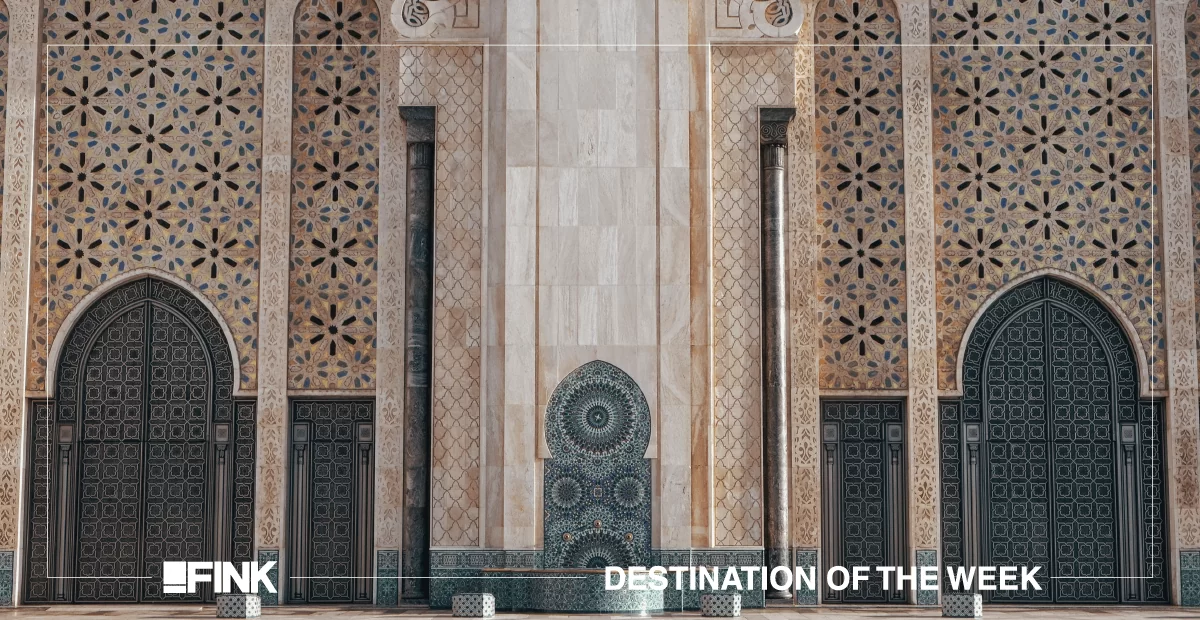

As is well-known, the history of the Iberian Peninsula, the European region where Portugal and Spain are located, is also the history of a deep and complex struggle against attacks from the societies of the north of Africa. For some centuries in the middle Ages, the region was completely dominated by this people, the Moors.
Between the years of 711 and 1492, a period of almost eight centuries, the region was under the control of people with cultures that were very different from the Iberian culture, whether in work, in faith or in cultural esthetics.
As for the last, the cultural interchange is evident. In Spanish cities, such as Malaga, Granada and Almeria, the architectural development of these seven centuries, for instance, was highly marked by the esthetics of the Islamic societies of the north of Africa.
It’s obvious, however, that even with the fall of Moorish power in that European region, the culture remained strong. Even in the Iberian colonies, explored from the 16 th century on, the presence of the Islamic culture is noticeable. This point connects us to our central theme: looking at Casablanca, capital of Morocco, in the extreme north of the African continent, and which was always in the midst of this social and cultural interchange, it’s possible to find esthetic parallels with artifacts from the Iberian culture.
A first great similarity between the cultures is in the use of geometric forms as architectural adornments. In Muslim culture, the representation of human figures must not gain a totemic character, that is, of adoration. Thus, the mosques and other sacred temples are mainly decorated with geometric patterns and abstract forms. In the south of Spain, architecture gained an esthetic characteristic strongly influenced by Islamic ornamentation. Not just on this point, but also in the domed shapes of doors, jambs and cupolas.
The abstract forms also gained relevance in Portuguese tiles, a mark of Portuguese culture that is highly influenced by this specific esthetic. This is another example of an artifact that was transferred with great popularity to Brazil.
Thus, we perceive that the cultural similarities between societies of Iberian origin and the people of the north of Africa are evident, in esthetic terms. This is mainly due to the ancestral interaction that still leaves its fingerprint in the construction of other peoples.